Friday, April 26, 2013

Gush

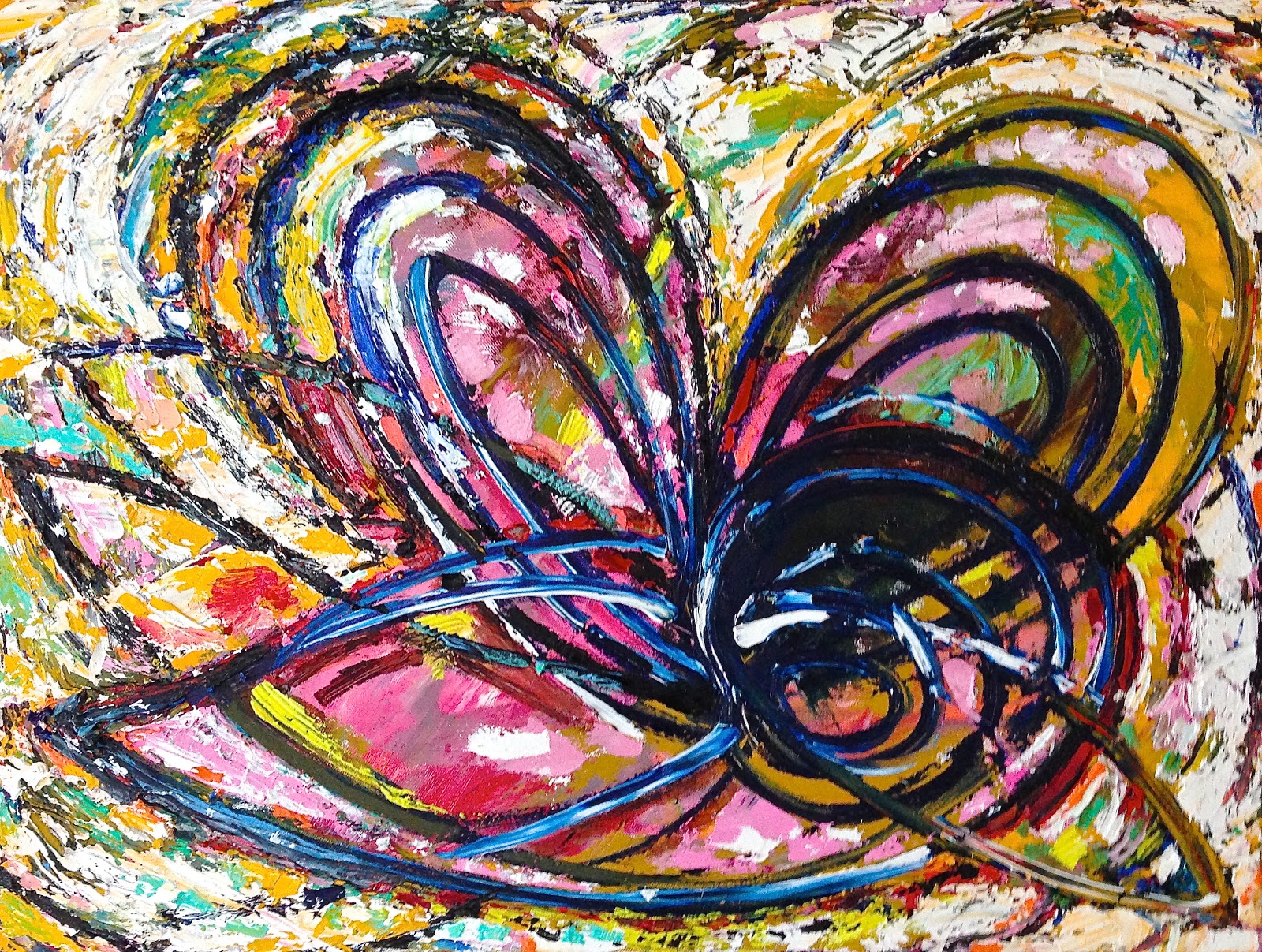
Joan Mitchell(1958), oil on canvas, 190 x180 cm

I was looking at the work of Joan Mitchell and wondering just what it was that made her more celebrated than a painter like Milton Resnick, who remains comparatively and relatively obscure, a painter's painter for the most part, despite the best efforts of his New York dealers Robert Miller, and later Cheim&Read, both of whom represented Mitchell as well. These two painters were both the fiercest, most individualistic, most "felt" abstractionists of the 1950s. Hard to think of many artists who packed more into every single stroke than them. Twombly, Guston, de Kooning, Pollock? Sure. Maybe. But mark for mark I'd put my money on Resnick and Mitchell. It is something you can't teach or fake. Like people who can't lie to save their lives.


Milton Resnick EAST IS THE PLACE(1959), Oil on Canvas


The interesting thing is that Resnick changed. That may be the difference. Mitchell never did. Not really. She never abandoned the mark. It was always the mark. It defined her as much as she defined it.


Milton Resnick(2010), Cheim and Read Catalogue, "The Elephant in the Room"  

Resnick went somewhere else as a painter in the 60s. He sought to redefine painting, for himself, and finally, for the rest of us. I remember when I was trying to go out with an art writer in New York in the very early 80s, probably 1980. She kept me guessing and instead steered me toward writing about the Resnick painters, him and his followers. I was willing to do that because it gave me a chance to court her. I wasn't buying Resnick's redefinition of painting and I made her keep explaining it. I was never truly convinced but I went along with it because the frustration it was causing her put my courtship in jeopardy.


Late Resnick, Cheim&Read

Just for the record, she never even let me in the batter's box, let alone to first base. She had a mission, and she was willing to lead me on to a point to get some print for the cause. I couldn't help feeling like some Jean-Paul Belmondo was smoking a cigarette waiting for her around a corner so she could be done with this stupid American boy. I did visit some of the cool-aid drinking Resnickites with her, who all painted pretty much like him. I even wrote about one of them. I still remember that art writer carefully and painfully explaining the whole Resnick thesis in her bare little lower East Side apartment. Showing me step by step how the idea was that Resnick and his followers brought the experience of the painting into the space in front of the picture plane. So instead of depth of field and then flat painting, we now had this new dimension, that like some hologram existed in between the viewer and the painting.


Milton Resnick, (1982) Straw Series, oil on board, 40 x 30

Of course this was where I had a problem, the relative space between the viewer and the painting surface. How far did these 3d paintings extend? Five feet? Thirty feet? I wonder how she felt when Resnick abandoned all of that? And the other Resnickites? What happened when he turned back? I get no pleasure from that. I was cheering them on, even if skeptical. Not happy to see them get hung out there. When confronted about his followers Resnick dismissed them. Said they weren't artists and it didn't matter. Like puppies in a bag tossed over a bridge, according to his friend and one time assistant Larry Deyab. That no real artist would be a follower. True. Still pretty harsh stuff if its true that that was how he felt about his disciples.


Mitchell 1956

Of course Mitchell might have been even harsher if that's possible. Foul mouthed, she once apparently asked an artist loudly at that artist's opening "whose blank she had to blank" to get the show. Strong stuff. But she found a way to stay true to her work to the end. Did she end up just imitating herself, at least part of the time, is that what happened? Is that what made her self-destruct in alcohol and cigarettes? Or was the painting the genuine thing in her life, the happy thing in an otherwise miserable life, like a modern day female Van Gogh. The comparisons stop there of course. She was never exactly poor. Quite the contrary. And she was very well connected and art world successful.


Milton Resnick, (1959) AS.2,  oil on canvas,  82 x 80

I liked Resnick's paintings from the 50s, what he rather dismissively called his "pretty" paintings. The individualism went out of his marks and paintings as a whole by the early 60's. They became collective. The marks became more and more subservient to the whole. The paintings became slabs. Almost colorless, unless you got up close. Even then there was some larger entity burying them.


 Joan Mitchell, 1980,  Cypress 

Mitchell just kept finding inspiration. Monet, van Gogh. Living in France. The same inspiration Resnick had long since moved on from, or discarded, or sublimated, or outright rejected.


Joan Mitchell, (1982) Buckwheat, oil on canvas, 87 x 78.8

Mitchell and her collectors have been rewarded for either staying behind or staying the course. Resnick is still waiting for the light to shine on him. Apparently he felt that Pop Art had ruined everything, especially for him. Resnick might have gladly shot Andy Warhol for that. He outlived both Warhol and Mitchell and never found justice. He might still be alive today but chose to end it all on his own terms in 2004.


Early Resnick, Cheim&Read

I always loved de Kooning. My theory is you follow your gush. What makes you gush? Is that your life? It is not a question of luck. More a question of conviction. What are you willing to sacrifice for your gush? Family, friends, money, security, comfort, children? De Kooning had the gush. Love and art. The gush of paint. The gush of form. The gush of life. Resnick had that in the 50s. Undeniable. Came and went after that in my opinion. Mitchell had it to the end. But who's keeping score?
Addison Parks, Spring Hill


Resnick, 1979 

- Posted using BlogPress from my iPad

Monday, April 15, 2013

Being There: Martin Mugar's Fire


In the cold wintery gray of Boston, even as we approached the Bromfield Gallery on Harrison Ave, me and my friend, the painter Larry Deyab, were off to see Martin Mugar's new show, and we caught the bright warm glow of it from the outside and from way off. It was unmistakable. Like some mystical experience calling us. Some beacon of hope. It radiated this choir-of-angels light like some magic cave in the side of a stone mountain. Martin Mugar's work is like that. Elvish stuff. Again, magic.

Martin Mugar at Bromfield


As we got closer we could see him through the large windows, standing in the middle of his fire, in the flame of it, waiting for us at the center of the gallery, surrounded by his work. The wizard Martin Mugar. I've always said this about his work. That the energy, the light in it, combusts like some cold fusion machine, the particles circling around inside it until it reaches that critical mass and explodes. But some things have changed in the new work, and these changes have moved the experience along in a way that amplifies what we have come to expect from him.


Make no mistake, as physical as the work is, like sculpture almost, these paintings are a highly aesthetic, even spiritual epiphany from the word go. They are not, as they have sometimes been described in the media, a candy-coated, Willy Wonka pleasure ride, although the pleasure is there for sure, and physically they resemble taffy and chewing gum. That is their worldly form. It might be difficult to get beyond that for some, but when you get still with them, look at them, see them, listen to them, hear them, let them work their magic, well then, you get carried off into space, catapulted into the stars, like some hyperdrive, and will find yourself floating in some consciousness that is another world. The world of Martin Mugar. A rare world. A world like no other. 


And that is it. That is the true meaning of originality. The work takes you to a place that you have never been before. To a world with as much attention to detail and experience as our own. Some might accuse the work of being obsessive, as though he was gilding some lily. But his devotion to the work is the necessary attention paid to creating something complete, evolved, seen through in a way that doesn't just drop the viewer off on another planet, but makes sure that that aesthetic experience is sound and true. This is a vision. A generous vision. A loving vision. A lofty and masterful vision of great beauty and poetry and intelligence and feeling. 

Martin Mugar at Bromfield

The abstract nature of the work allows for that lofty vision. It is not candy land. It is that ultimate place of enlightenment and light. It is the climb to the top of the mountain. Each painting is a step. The thick waxy pastel paint couples together, compounds, like drops of water coming together to form a tsunami, diffusing, to flood the painting and the viewer in a symphony of music and light, to lift the viewer up like an El Greco into the ether, onto some higher plane, into the heavens. 

Larry Deyab, John Wronoski, and Martin Mugar at Bromfield


Standing there with Martin, surrounded by his paintings, was like standing in the flame. Another friend, the rare books dealer John Wronoski, joined us. We basked in the work. We stood and talked and it was as though we were in some ethereal turkish bath of fire. Healing while it danced around us. And Martin was happy. And why wouldn't he be? Everything he worked for was working,  for all of us, beautifully, like Swiss clock-work. All of that hard work. All of that hard seeing and sensitivity to the tint and temperature and hue and chroma and movement and juxtaposition and direction and correspondence of color, mark, texture and composition. It all came together. It all meant something. It all had a purpose, and we were all lucky enough to be there.  

Addison Parks
Spring Hill 2013


The Bromfield Gallery, Boston, Ma;  January 30 - February 23, 2013


Thursday, April 11, 2013

No Guilt. No Shame in Art!


Hans Hofmann, courtesy of PBS.org


The following is part of a note I wrote to someone when they lamented that the digital images of their work failed to reveal the struggle. I hope it is worth sharing.


"I think it is clear that your paintings are the result of dialogue and some kind of journey. I prefer not to use the word struggle as it conjures up that old machismo that I think gives people a negative impression of painting. I like to say finding the painting in the painting.

Martin told me you were a fan of Leland Bell. I studied with Leland in 1975-76 and he was probably one of the most hands-on artists I ever worked with. I didn't share his distrust of a painting that comes too quickly though. I figure a painting takes as long as it takes. Minutes or years.

These days I tend toward years simply because I have really no interest in making another painting, just painting itself, so I watch them come and go out of the simple curiosity of where they will take me. When they come to a clearing that I want to know more about and think I can learn from, then I stop and let them be.

Presumably this is what we all do. After interviewing and writing about the arts and artists for over forty years I found that the overwhelming impression was that they didn't want it to get out that what they were doing was a good time, that in order to justify being an artist while everyone else was doing a job, they had to act like it was all this angst-ridden struggle and suffering, and when I got them to admit what a blast it was to be an artist, they felt betrayed.

It is like when you're in love, you have to keep it to yourself, because no one else is and they will hate you for it. That artists are in love is a stupidly disguised charade.

You don't have to look at Van Gogh or Hofmann or Matisse or Picasso very long to see that whatever else, they were in love with painting and that it was the love of their lives. Looks like the love of your life to me. I think Leland would have been a much happier guy if he had admitted that completely. No shame in love. No shame in art.

I tried to alleviate my students of that guilt as a teacher, and I try to do the same for my artist friends. Joan Snyder and Louise Fishman, painters I admire very much and used to know a little, seem stuck there and beyond redemption in this regard.  I got in a little trouble writing about both of them.

Makes me think of Camus's line about that there are two kinds of people, ones that are happy and ones that don't know it. Applies to artists too of course. But they have the third thing of never wanting anyone to know that they are happy."

I've just known too many artists that hang a "curing cancer" sign outside their studio door but behind those locked doors they are dancing around in their tutus with a brush in their hand. Sends a bad message to young artists. No guilt. No shame.

Addison Parks, Spring Hill, 2013

Monday, April 08, 2013

A Fine Line

Hans Hofmann

Some artists I know love to talk about tension in painting, and I find it annoying. We've all heard it. One suspects that it is the influence of artists like Hans Hofmann, maybe Albers, maybe Held. That it is Germanic. Aggressive. 

The function is clear enough. Life! But I always have the feeling that a lot of artists who thrive on tension spread the energy and maybe, spread the misery. Like people who can't sit still. 

Ultimately the question is what state does a work of art, let's say a painting, find itself in when it is finished? Has it run its race and then come to a stop? Does it come to rest? Or instead do we catch it in full stride? In action? Pose, pause, or freeze frame?

Seems to me this tension thing is yes, part of the physics of art, and yes, part of the physics of talking about art, either as a teacher, an artist, or a critic. Tension is the pulling force. One half of Hofmann's famous "push pull" in painting. A stick he used to beat his students, and his paintings to... life! And don't get me wrong, I love Hofmann. But seeing his work is probably instructional enough for me. I endured the Hofmann school of teaching from a student of his and that was plenty.

Hans Hofmann

At this point in my life I think I almost prefer Calder's contribution to the conversation a little more, since he was actually working with physics. His mobiles and stabiles found that fine line between rest and action which so many people like to call tension. They hung on that point. They lived on that point. 

Sandy Calder

And what was it really? Besides the pull of gravity? People will tell you that there is good stress and bad stress. They define it in terms of positive and negative stress. The first brings vitality, the second debility. Life/death. Maybe the difference between going for a run, and running for your life. Stress doesn't only play a major role in the physics of architecture, but the physics of all art as well. 

Tension is the same I suspect. Good tension and bad tension. Life/death. My complaint is that this distinction of good and bad tension is overlooked, and that tension is overrated as a result. When a painting comes to rest, when it is finished, we want it to be alive, not dead. I think too many artists confuse tension with life, and think that if there is tension then there is life. I think that what makes a painting alive is when it has light, and promise. These intangibles make a painting active. Active is the positive we like about promise. Granted, it is only a suggestion, but isn't that really all a painting is? A suggestion? Tension for the sake of tension is just tension. Instead it is the promise of something that creates positive tension. The promise of motion, action, change, even sound, that keeps us, holds us, even pulls us. Positive tension. 

Which brings me to stillness. The thing the tension folks can't achieve. Stillness is what we need to meditate, muse, dream, imagine, and think abstractly and in depth. In layers. Connecting dots, maybe an infinite number. In stillness we can imagine the possibilities. Infinite possibilities. A painting that sits still can point to those possibilities. Suggest those possibilities. Well beyond our reach. Tension pulls us back. Keeps us tethered. Keeps us on a string.

Calder with Nino Franchina, Rome
Addison Parks, Spring Hill, 2013

Wednesday, April 03, 2013

The HIGGS Boson; MY HIGGS Boson


Bow Street Drawing Installation 2006

I've been looking for something for several years now. Something at the bottom of it all. Something at the start. Something at the center. Something I'd always been looking for, really. Something that has crept into every idle drawing since I can remember, and finally took over in my work, first through conscious drawing, and then finally in painting. I have been true to this something and have been unable to stray from it. My portraits of it are curiously consistent on one point. Literally. There is one point. One center. From which every thing springs. i called them centering drawings at first. and then source paintings. Source! and always it was this thing. Fountain. Flower. Star. Plant. Being. Energy. I often thought of Carlos Castaneda(he would like this of course).

Constellation Flower(2010), oil on canvas; 36 x 60 inches


But imagine my surprise when a few weeks ago it was believed that scientists had found the Higgs boson. The prime particle. The God particle. Imagine my surprise when they showed a picture of it. What it looked like. What the God particle looked like. It was my one of my paintings!


Higgs boson 2013


That's it right there. The Higgs boson. Now here is one of my many, many paintings.


Party On; oil on canvas; 2013


This one is a month or two old. 2013. Canvas and paints my children gave me for Christmas that was meant to get me painting again, painting again after dedicating so much time to fixing and fixing up our new home. The inspiration for this one came from the birthday banners that they make for everyone. In this one I managed to stay true to the spirit of celebration. Both birthday and celebration seem so appropriate on so many levels now. I can't help but be grateful for all of it. All of it. Thank you.

Addison Parks,
Spring Hill
2013

Bow Street Gallery; Addison Parks, Martin Mugar and Larry Deyab


Spring Hill Studio


Monday, March 25, 2013

Just To Be Clear; Painting and Other Friends


Addison Parks; WHIRLYBIRD(Higgs boson); 2010, oil on canvas, 14 x 10"


When I paint I go on a hike and where I'm going is hopefully new and unknown to me, or has something new to show me. I may end up going in circles sometimes and may end up back where I started or some place I've been before, but I don't intentionally choose paths I've taken before. I want to get somewhere I've never been before. I'm not trying to surprise the viewer, I'm trying to surprise myself. If I go somewhere I have never been, then I have surprised myself and I've learned something. Where did I go, what did I learn, these are always my biggest questions.


I don't paint what I know. I paint what I don't know. I paint out of curiosity. You know, find the painting in the painting, so to speak. I never have a fixed idea what a painting is supposed to look like. I paint from a feeling, an idea, something that draws me forward. Again, I don't know what it is going to look like and I am hoping to be surprised. How brave I am or can be or have been is my challenge alone. No one else goes with me; I go alone. No one else knows. No one else can judge me, try as they might. It is between me and myself. I don't paint to make something beautiful or successful, but I do hope that in the end, wherever I get, both of those things on some deeply personal level. 


If it is not however, I do not feel that it is a failure. What have I learned? Where did it take me? What can I still learn? These are such important questions for me. Which is why I am loath to destroy a painting. What would cause me to be so angry or unforgiving or destructive? If I absolutely hate a painting I have done, which seems unlikely, it would only be because I never went anywhere that meant anything to me, but hate wouldn't do it; if I hated a painting that would make me even more curious because hate can be very revealing since fear plays such a large part. I could really not care if someone else already felt they had been there. Why should that make a difference. Should I not go to Bali because other people have been there? If I say, hey I went to Bali and had a great time and I had never been there and it was all wonderful and new to me, but my friend's response was what? Been there, done that. Well then, I would say I have an asshole for a friend. And learned that! Learned something I hadn't quite figured out. Find another friend.


When I was in my 20s I had a show of 2 twenty foot murals at PS1(Now MoMA PS1). My first abstract murals. In oils. At the opening my friend and mentor Richard Tuttle's response was basically "all dressed up and no place to go." He actually said something about two beautiful cars in my back yard. A wry putdown. Not only was he less than a friend, he was less than honest. He had never been to that place I went and done what I did. Just because he may have known other people to go some where near I went, well, it is just his selfish agenda that he was always hunting for his "fresh meat." He was less than a friend to judge me and then be less than truthful and say, in effect, been there, done that. He had no idea where I went, and it was just pure ego for him to have to pretend that he had. Ego was Tuttle's big challenge and he was always trying to make it everyone else's problem while he was going through it. He lived in a dump because he was lusting after a penthouse, and hating everyone else for their penthouse and thinking everyone else should live in a dump too like him to experience dumpy so that they could experience humility they way he needed to. Don't you love people who want to go in the water but have to push other people in first to make sure it is safe or what they actually want to do? From Tuttle I learned to look out for that in myself and others, and believe in my own path. Did it suck?Absolutely. But I have learned from it. I may miss my friend but not that. Have I come across these people again? Yes. Are they dangerous? Yes. I just keep going if I can.


Don't get me wrong. When I show my work everyone is free to do what they like. I have no control over that and want none. Richard Tuttle was free to be as big an asshole as he could be in response to my work. He was free to do whatever his ego dictated, and I was free to do whatever I wanted with his response. That he was bad just meant he was a bad friend and no friend at all. Just to be clear, a friend is in your corner, rooting for you. If they say they are your friend and are not (in your corner), well, they are a liar, and not your friend, and you should probably have nothing to do with them. Also, beware of those who can only be in their own corner, for these are people who are fighting the whole world and they are dangerous. Not that being in your corner is a prerequisite for friendship, but it is just something you will find out sooner or later, and yes, it matters.


Addison Parks, Spring Hill
- Posted using BlogPress from my iPhone


Location


Thursday, March 21, 2013

James Balla coming to PAAM Summer 2013


Ominous, alone...(2012);24 x 24"; oil paint on panel 

JAMES BALLA: 
Second Sight and the Balance of Opposites


James Balla makes mysteries. Right away we sense this about the work. It is about flowers but it's not. It is about clouds but it's not. We don't necessarily want it to be complicated, especially unpredictable, but it is. We are tempted to be happy with the elegance of its exterior, the tip of its iceberg, but that would be a mistake. 


James Balla is poet as painter, or the other way around. Living a quiet life as an artist in Provincetown, a quiet life that of course rages like the sound and the fury. How could it not? The farther you get away the closer you get.  He is surrounded by nature. It permeates everything he sees, everything he feels,  everything he paints. The broad sweep of ocean and sky. The way light and pattern play across that expanse. The way in one motion he can discover something washed up on the sand at his feet, and then look up and explode beyond the infinite, beyond the imagination, beyond the horizon, beyond the clouds, beyond the stars. How he takes that, and makes sense of it, and transforms it, is what gets gifted to us in his work. That is what he frames for us, lays at our feet, shows us with a wave of his hand. The results are always somehow primordial, even mythical. Somehow prehistoric in the best sense of the word. Before we got here. Somehow just between us and our maker. Creation. Not much in between.


Untitled(2003); 15 x 15"; oil enamel on mylar


That process of transformation, the way his experience gets translated into the paintings, is very much at the heart of the mystery of this work. It requires a certain wonder, a kind of plunge. Of him and us. Contemplation and experimentation. Laying something bare, lifting layers, and laying it all out there. Examination and exposure. James Balla goes out over that edge. Here he is Kokopelli with a wry smile. His paintings flow like a rising tsunami. They flood him. They flood us. A watery life. A watery death. Complicated. Just as they are a marriage of opposites, of earth and sky, dark and light, immensity and density, that balance of opposites can also become a war. The fight between things. Breaking up and making up. War and peace. Peace and war. They are the irreconcilable. The contradictory. They need each other, complement each other. But. Paradox. The great mystery. Paradox at work; paradox at play; paradox on holiday! 


They dance, they collide. Flashing! Running hot and cold. Freud's life wish and death wish having at it. Humidifier and dehumidifier in a room fighting it out. Love is a battlefield. Black white, white black. Line space, space line. Man woman, woman man. Light dark, dark light.  Real abstract, abstract real. Figure ground, ground figure. Patterns. Shapes. Things. The idea of things.Creation and destruction, destruction and creation, and back again. They are the stuff of James Balla’s work.


Art's paradoxes. Dada's anti-art art; Surrealism's dream made real(or is it the other way around); Pop's commodity as art(or again, is it the other way around); Minimalism's less is more. How much time have you got? It is all there in the work. As much as James Balla loves nature, he loves art. They are the light out of darkness. 


And is it work? Why do we call it work? Why ask? Because what the artist does is, again, so much the mystery. We call it work so that we know it is hard, but it goes beyond that. To infinity. So why do we call it work again? So we can hide behind that? So we can play? The play of Jung. The play of digging. Fathoming. Sounding. Seeking. We play. Hide and seek! What’s in a name? James Balla. Ballare! Dance!  James. Jim. Gym! Jungle Gym! See Jim dance! See Jim play. See Jim find his way. In the mush of paint, or asphaltum, or graphite, all like earth in his hands, looking for what’s at the bottom, like a boy digging in his backyard, exploring, certain he will find the light, the treasure, and maybe even China! 


Signs. That’s what we see. The perhaps foolish gesture of hope that is art-making. That beautiful cut flower that rots in the vase and putrefies its water. Live to live. Live and die. We pick ourselves up and go forth. Tabula Rasa. A new beginning. Despite the unbearable we nonetheless bear.  Growth and decay. Over and over. It leaves its mark on us as we leave our mark on it. The human being. The artist. James Balla makes paintings tuned to this station. The dream, the illusion, the real. Memories, dreams, visions. Clairvoyance. Second sight. Where does it begin? Where does it end? The circles. The seasons? In life and death? Does art transcend that? James Balla believes so. His work is proof. His work is exhibit A.


Soul in Flight((1997); 50 x 50"; asphaltum, shellac on linen


But we can forget about all that. The living and dying. The hope and despair. The happy sad. The way they define each other all too well. Here again we have that simplicity. Complexity broken down. Broken down into shapes. Vessels that try to contain some unfathomable fluid in place. Fluid life that spills out, that is otherwise without shape, without contours, without order. A mess. And then patterns. Degrees of patterns. Patterns of things real or imagined. Patterns of stripes. Patterns of flowers. Patterns of clouds. Patterns in space. Patterns in dreams. Real or imagined. James Balla gifts us a painting. A sign. A sign of life. Of truth. In the mystery that is life and art we get a moment’s peace. The beauty makes it so.


The Source(1992); 48 x 48"; oil on canvas


And still. It is just a moment. The work keeps vacillating! Of course! Kind to be cruel; cruel to be kind. Can't make up its mind. Back and forth. Gentle tough. Big picture attention to details. James Balla keeps us moving. The new day. Anything can happen.


But the proof is in the pudding; it all comes out in the wash. There is this thing. The work of art. The poem. The painting. Yes. That is it. All that matters. The talk stops there. And then starts. The work happens. The painting happens. It is born. It is real.  And after every winter the bear comes out of his cave, the birds migrate back north, the perennials blossom and bloom. The winter turns to spring and summer. The resurrection! The power and the glory! For ever and ever? Amen!


We have this to look forward to and we do. Wash away the winter; summer is here. A new season. A new body of work from the poet artist James Balla! Behold! Ecco! And of course, as always, just a word of caution! Keep your eyes peeled!  Things aren't what they seem. Pay attention. And let the work play, wash over you, sneak up on you like that tsunami. Feet in the sand, feet in the surf. Waves going in and out.


Wings of Silence(1995) 30 x 30”; oil on linen


You get to muse like he muses. See like he sees. Feel like he feels.  Dream like he dreams. On nature. On life. On love. On art. On stars. On clouds! On all of those things and more! 


And what of all their opposites? They are there. On hold, if only for a moment. Sort of. Finding the beginning or the end is that bowl of spaghetti. Never mind. Won't happen. Just eat! Mangiare! Enjoy! And be happy! Go on! Summer won't last forever!


Addison Parks, Spring Hill, 2013


 James Balla has an upcoming retrospective at PAAM in Provincetown opening June 28, 2013


Friday, March 15, 2013

Don't Go Chasing Black Clouds in Search of Silver Linings, And Other Thoughts

You can't point to the silver lining to say a cloud was ok. Every cloud has a silver lining. Some people try to point to the silver lining to justify the cloud. Wrong. These are generally the same people who find the fault in things. Nothing is perfect. Everything has a fault. Finding the fault does not make you a critic, or make you right, or make something wrong. Wrong. People find the fault in others to keep themselves afloat.
We shoot for perfect like we shoot a basketball. They don't all go in but we keep the bar the same height, we're aiming to get it in, we're aiming for the hoop. It is imperative that we know where the hoop is and stay focused on that. As Bill Russell says: it is all about baskets!
Don't go chasing black clouds in search of silver linings.
******************
There is a story to tell in modern art that has Gino Severini at the center of it. He was a kind of lynch pin. A key stone.
It started when he moved to Paris in 1907. By the end he was responsible for a domino effect which led from Cubism to Futurism to Suprematism and Constructivism to finally Minimalism. The key ingredient was movement. Movement and politics. By the time it ended with minimalism the movement and politics had gone out of it and it was just itself, the self-identical object. But a lot had to happen before then, and like I said, it all started in Paris in 1907.
*****************
Painting is a high risk high reward enterprise. The education system generally inspires conformism and backward thinking, especially when there are grades and passing and moving forward issues in the balance. Even the most broadminded of teachers has agendas, preferences, biases, and blind spots. The wrong teacher for a student can cause irreparable damage. So that when you combine the high risk high reward nature of painting with the high risk low reward nature of education it is a bad fit. Everybody knows this, they just think they will be different. The best teacher is like the best frame; the one that gets out of the way and lets the work shine on it own.
Painting also can very often be a one step forward two steps back experience, and the student artist needs to be in an environment where they can do that without fear of failure, condemnation, judgment, etc. A student artist needs to be able to go out on a limb and not get jumped on for breaking it off. It takes an awfully wise teacher to let a student fail so that they can paint their way out of trouble. It takes an awfully wise teacher to not step in a fix that. Every solution given the student artist just means one less solution is available to them when they get in trouble.
***********************

Staying in the moment while the future is beating down our door

Teenagers are hammered by questions about the future

Juried art shows aren't just political, they are intensely, fiercely political

The struggle to be real, not synthetic, not digital, not filtered, not fake, not obfuscated, not computer enhanced, not drug enhanced, not shouted down, not denied, not dismissed, not ignored, not lied to or not to lie, not misdirected, not sugar coated, not being blown off, not isolated, not asleep, not put to sleep, not on board, not rocking the boat, not squealing like a pig, not clinging to guns and religion, not being handled, not being bullied, not losing your head, not flipping out, not getting too comfortable, not looking the other way, not bought, not trying to be too secure, not part of the team, not part of the mob, not part of the ruling class, not a victim.

What is an artist to do? To show their work? Suck up to one or other establishment, the commercial art world, the academic art world, the museum art world? To all or none? To be real?


Addison Parks, Spring Hill, 2013

- Posted using BlogPress from my iPhone

Wednesday, January 23, 2013

THE PROBLEM WITH BEING AN ARTIST: WHAT PROBLEM?


Addison Parks; Dragon Fly(2012), 20" x 30", oil on board


I've been talking lately about this idea that every artist thinks that they can solve their problems through their work, maybe even the problems of the world; that if they can just make something successful all of their problems, yes, all problems, will go away. Another way of putting it is that when an artist sees problems, they turn to their work to solve them.


Is this crazy? Is this some kind of affliction? Does it take an affliction to make an artist? People have suggested as much. I've had other artists agree that artists are people with a hole in their lives, a hole that they try to fill with art.


One of the key elements inherent in making art is problem solving. Even the most free-flowing artist encounters problems in their work that need to be solved. Problems with drawing. Problems with composition. Problems with materials, color, surface, etc. Problems with light, perspective, space, etc. Problem-solving is just a natural part of the process; the one caveat being that treating your art like a problem makes it a problem. Keep the cart behind the horse. Problem solving is not the prime mover. The prime mover is the driving inspiration that pushes and pulls us through our work.


Solutions can be elusive, and executing them can be sweeping, radical, and even brutally drastic at times. Some work comes easily. Some does not. Some work is a terrific struggle. Artists can't help but form a bond with that work as much as they would love for everything to happen as if by magic. Sacrifices are commonplace. Artists often eradicate aspects, passages, elements which they cherish, but must be given up for the greater good of the work in question. Some artists even go back to the beginning, destroying their first effort and starting over. Other artists make change a part of the experience of the work, part of the process; corrections, failures, about faces, and adjustments absorbed into the whole.


In this respect the artist is king, or God. This ongoing nature of the creative process leads the artist to focus on what they can control: their work. Their work speaks for them. Their work reflects them. A successful work makes them successful, at least for the moment. Every time an artist makes something they are reborn. Remade. Elevated beyond the mundane of the everyday world. Is it any wonder that artists feel as they do, that their work is the solution to all of their problems? Is it any wonder, that like the captain of their creative ship, that they live and die by that ship, and that if and when necessary, they will go down with it? It is a complicated fact that if an artist doesn't feel that way, doesn't turn to art to solve their problems, they probably aren't an artist. For the artist, art solves everything! 

Addison Parks
Spring Hill, 2013

Tuesday, January 22, 2013

TALKING PAINTING: THE GIFT OF LISTENING

Addison Parks(2011-13), Noneedtopanic.com, oil on canvas, 18 x 24 inches


Nobody talks painting. Nobody. Some people argue, some people poke around the edges, some people contextualize, and some people describe, but nobody talks painting. They just talk ABOUT it, which is what my friend Richard Tuttle liked to say, his wry smile close at hand. 

And there is a reason for all of this. Nobody talks painting because nobody listens to painting. You can't talk painting unless you can listen, and listening is hard. Painting doesn't speak to everybody. People may be interested in painting, want to own it, criticize it, curate it, hang it in their homes, go to galleries and museums to see it, even love it, but if it doesn't speak to them and they can't listen, well, then they can't talk it. Which is fine. They can do all of those other things. They don't have to talk painting. Talking painting isn't even important. You don't have to be able to talk painting to enjoy it. But make no mistake, being able to talk painting is a gift. And after years of talking painting I had a funny thing happen the other day.


Addison Parks(2013), Little Star, oil on canvas, 18 x 18 inches

I was sitting with my daughter in the living room of our home and she just started talking painting--my painting. It was kind of startling to me. I hadn't had someone talk about my paintings in I can't remember when. And she's 13! I felt uncomfortable. It felt wrong. Like she was taking care of me instead of the other way around, which is the way it is supposed to be. But she was doing it and she was right there and she was saying everything that meant everything to me, like she was messing with me or speaking in tongues or channeling Greenberg or something. EVERYTHING! I wanted it to stop. I had gotten used to people never really having anything to say. I felt unnerved, undeserving.


Addison Parks(2010), Liberty's Fire, oil on canvas, 36 x 42 inches


When I first started writing about art I got the same reaction from people. I could talk about their work and they were shocked. I could listen and keep listening, just going down into the work. I could tell that they had this strange mixture of feelings -- elated and at the same time violated. They asked me how I could see what I saw in their work. There was disbelief. Was I putting them on. Exactly what I felt when my daughter talked about my paintings. 

I had always assumed that everyone could talk painting, that they could see what I saw, so that if they didn't say anything, that it was because they chose not to. But then I discovered that they couldn't. They couldn't see anything, but I could. When I stumbled into a writing job as an art critic for a small weekly it took right away. People wanted to know what I saw. People wanted me to see for them. Either because they were the artists who needed it, or just people interested in art who couldn't see it. As a result when I moved to New York after art school, I became a sought after art writer. And it wasn't because I could write. I couldn't. But I could listen, and like I said, keep listening, which is the important part about listening. You don't stop. Then I found some way to put what I heard into words. It took a while for me to understand all the fuss, but I actually made artists cry with my words. They had ached to hear the words I said; they had ached to hear someone say what they had poured into their paintings. 

When I finished up teaching at RISD in 1996 and retired to raise a family and paint, I had one last critique with my students at the RISD Farm. It was a fitting end for my career teaching on and off at the school that I had also graduated from in 1976. My favorite place at the school had been the Farm. It was where I went to paint during and even after I got my BFA. Sitting out on the grass I was determined that I would leave these freshman with this one gift, or at least the knowledge of it. 

I made them listen to each other's work if it was the last thing I was going to do. It was as though I had asked them to eat shit. It was slow going for the entire class. Still I kept at it. I was determined. And then a miracle occurred. One of the students did it. He listened to someone else's work and kept listening, just going deeper, and then said what he had experienced.  He read it like he was reading the innermost thoughts of the girl who had done the work. And she was embarrassed. Naked. "You can see that?" That was her reaction. But she was also pleased. It was awesome, and everyone new it. It was a wonderful ending to the year, and I have never taught since.  Years later I received a letter from one of the kids in the class telling me what it had meant to him. That it was the best class that he had ever had. 


Addison Parks(2011), Constellation Flower,  oil on canvas, 42 x60 inches


When my daughter read my work I felt like an open book. "You can see that?" That was my reaction. That was how I felt and I didn't even know it right away. I was in shock. My daughter thought that it was no big deal but she was pleased with my reaction. She liked finding out that she had this gift. Just to make sure I hadn't imagined it, I asked her to look at my newest paintings. She nailed them. Not a little to the left or a little to the right. Dead center. She saw everything. Plain as day. She saw what I was thinking. What I was up to. She saw the layers. The thing behind it. Like she was reading my mail. 

And all of those artists I had talked to over the years flashed before my eyes. Over forty years of people who I had talked to about their work and watched them look at me as though I was messing with them. "Who told you"... "no one ever"... "how did you know" and more swirling around in their brains. Because that was how I felt right then. And I felt grateful the way that they felt grateful. A little like crying. Like they weren't crazy. Like what they were doing in their work was really happening.

My daughter was funny about my reaction.  She just laughed and said it was because everyone I know just wanted to talk about their own work. She apologized if that sounded mean. Just the night before she had seen an artist in our home pass all of the many other artists on our walls and gush unabashed in front of her own work. She thought it was funny. 

But what she said wasn't untrue. I explained to her that not every artist is an art lover, that there are makers out there. People who make art because they have to, because they can't do anything else, because they are trying to fill a hole in their life, because they are good at it. They aren't necessarily interested in art at all, not in anyone else's, just their own work. Which is fine. Not a supposed to be. Not a judgment. Just the way things are. I told her that for some other people it is a chicken or egg thing, that it was for me, that I couldn't remember whether I loved art or making art first, that it seemed to happen all at once, but together. Still, after a long time of talking about other people's work it was nice to have someone to talk about mine. I just didn't think that it would come from where it came from, that it would come from my teenage daughter. Just goes to show!


Addison Parks, Spring Hill, 2013


Addison Parks(2012), Banana Boat, oil on canvas, 6 x 8 inches