Monday, March 25, 2013

Just To Be Clear; Painting and Other Friends


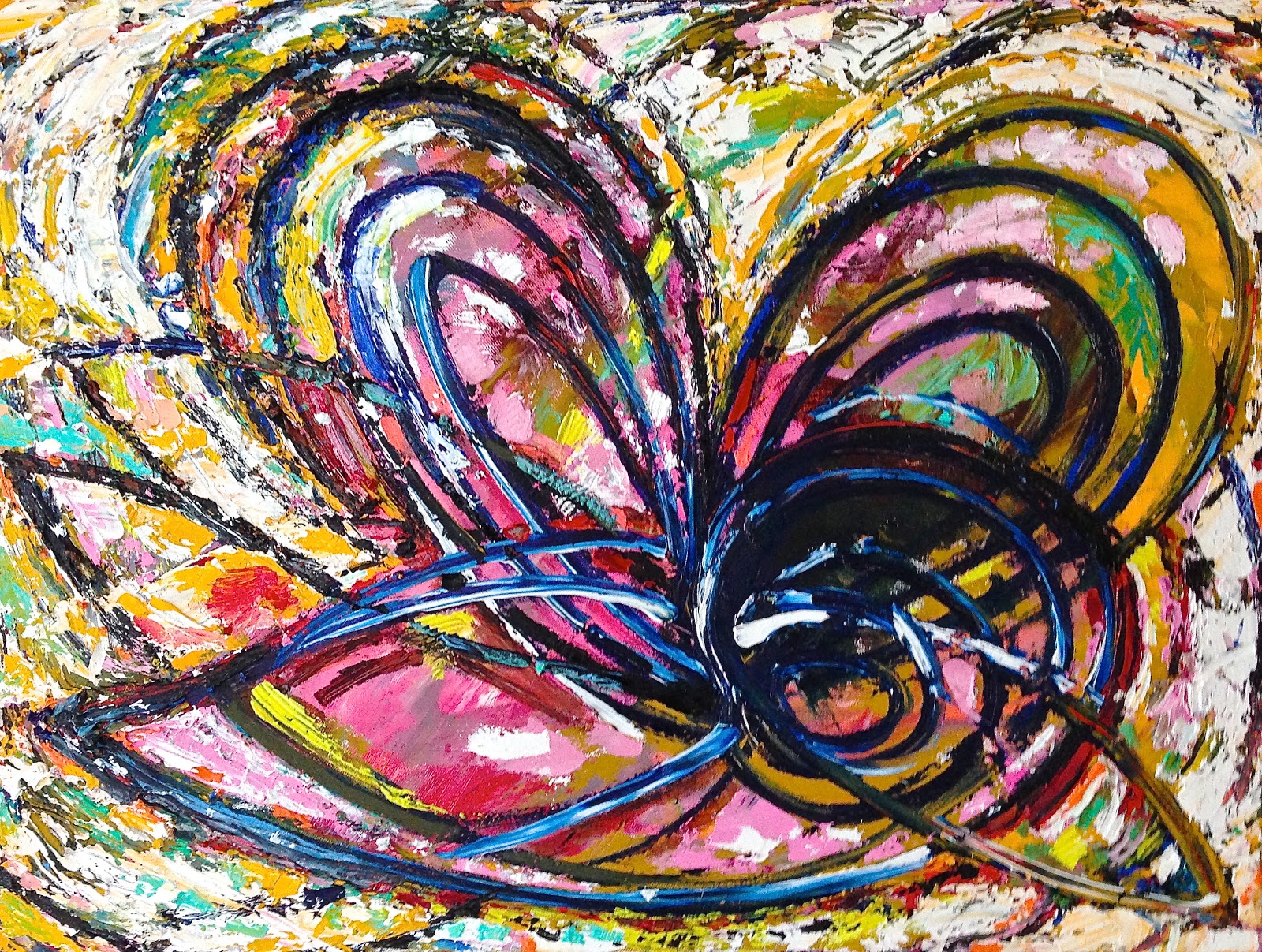
Addison Parks; WHIRLYBIRD(Higgs boson); 2010, oil on canvas, 14 x 10"


When I paint I go on a hike and where I'm going is hopefully new and unknown to me, or has something new to show me. I may end up going in circles sometimes and may end up back where I started or some place I've been before, but I don't intentionally choose paths I've taken before. I want to get somewhere I've never been before. I'm not trying to surprise the viewer, I'm trying to surprise myself. If I go somewhere I have never been, then I have surprised myself and I've learned something. Where did I go, what did I learn, these are always my biggest questions.


I don't paint what I know. I paint what I don't know. I paint out of curiosity. You know, find the painting in the painting, so to speak. I never have a fixed idea what a painting is supposed to look like. I paint from a feeling, an idea, something that draws me forward. Again, I don't know what it is going to look like and I am hoping to be surprised. How brave I am or can be or have been is my challenge alone. No one else goes with me; I go alone. No one else knows. No one else can judge me, try as they might. It is between me and myself. I don't paint to make something beautiful or successful, but I do hope that in the end, wherever I get, both of those things on some deeply personal level. 


If it is not however, I do not feel that it is a failure. What have I learned? Where did it take me? What can I still learn? These are such important questions for me. Which is why I am loath to destroy a painting. What would cause me to be so angry or unforgiving or destructive? If I absolutely hate a painting I have done, which seems unlikely, it would only be because I never went anywhere that meant anything to me, but hate wouldn't do it; if I hated a painting that would make me even more curious because hate can be very revealing since fear plays such a large part. I could really not care if someone else already felt they had been there. Why should that make a difference. Should I not go to Bali because other people have been there? If I say, hey I went to Bali and had a great time and I had never been there and it was all wonderful and new to me, but my friend's response was what? Been there, done that. Well then, I would say I have an asshole for a friend. And learned that! Learned something I hadn't quite figured out. Find another friend.


When I was in my 20s I had a show of 2 twenty foot murals at PS1(Now MoMA PS1). My first abstract murals. In oils. At the opening my friend and mentor Richard Tuttle's response was basically "all dressed up and no place to go." He actually said something about two beautiful cars in my back yard. A wry putdown. Not only was he less than a friend, he was less than honest. He had never been to that place I went and done what I did. Just because he may have known other people to go some where near I went, well, it is just his selfish agenda that he was always hunting for his "fresh meat." He was less than a friend to judge me and then be less than truthful and say, in effect, been there, done that. He had no idea where I went, and it was just pure ego for him to have to pretend that he had. Ego was Tuttle's big challenge and he was always trying to make it everyone else's problem while he was going through it. He lived in a dump because he was lusting after a penthouse, and hating everyone else for their penthouse and thinking everyone else should live in a dump too like him to experience dumpy so that they could experience humility they way he needed to. Don't you love people who want to go in the water but have to push other people in first to make sure it is safe or what they actually want to do? From Tuttle I learned to look out for that in myself and others, and believe in my own path. Did it suck?Absolutely. But I have learned from it. I may miss my friend but not that. Have I come across these people again? Yes. Are they dangerous? Yes. I just keep going if I can.


Don't get me wrong. When I show my work everyone is free to do what they like. I have no control over that and want none. Richard Tuttle was free to be as big an asshole as he could be in response to my work. He was free to do whatever his ego dictated, and I was free to do whatever I wanted with his response. That he was bad just meant he was a bad friend and no friend at all. Just to be clear, a friend is in your corner, rooting for you. If they say they are your friend and are not (in your corner), well, they are a liar, and not your friend, and you should probably have nothing to do with them. Also, beware of those who can only be in their own corner, for these are people who are fighting the whole world and they are dangerous. Not that being in your corner is a prerequisite for friendship, but it is just something you will find out sooner or later, and yes, it matters.


Addison Parks, Spring Hill
- Posted using BlogPress from my iPhone


Location


Thursday, March 21, 2013

James Balla coming to PAAM Summer 2013


Ominous, alone...(2012);24 x 24"; oil paint on panel 

JAMES BALLA: 
Second Sight and the Balance of Opposites


James Balla makes mysteries. Right away we sense this about the work. It is about flowers but it's not. It is about clouds but it's not. We don't necessarily want it to be complicated, especially unpredictable, but it is. We are tempted to be happy with the elegance of its exterior, the tip of its iceberg, but that would be a mistake. 


James Balla is poet as painter, or the other way around. Living a quiet life as an artist in Provincetown, a quiet life that of course rages like the sound and the fury. How could it not? The farther you get away the closer you get.  He is surrounded by nature. It permeates everything he sees, everything he feels,  everything he paints. The broad sweep of ocean and sky. The way light and pattern play across that expanse. The way in one motion he can discover something washed up on the sand at his feet, and then look up and explode beyond the infinite, beyond the imagination, beyond the horizon, beyond the clouds, beyond the stars. How he takes that, and makes sense of it, and transforms it, is what gets gifted to us in his work. That is what he frames for us, lays at our feet, shows us with a wave of his hand. The results are always somehow primordial, even mythical. Somehow prehistoric in the best sense of the word. Before we got here. Somehow just between us and our maker. Creation. Not much in between.


Untitled(2003); 15 x 15"; oil enamel on mylar


That process of transformation, the way his experience gets translated into the paintings, is very much at the heart of the mystery of this work. It requires a certain wonder, a kind of plunge. Of him and us. Contemplation and experimentation. Laying something bare, lifting layers, and laying it all out there. Examination and exposure. James Balla goes out over that edge. Here he is Kokopelli with a wry smile. His paintings flow like a rising tsunami. They flood him. They flood us. A watery life. A watery death. Complicated. Just as they are a marriage of opposites, of earth and sky, dark and light, immensity and density, that balance of opposites can also become a war. The fight between things. Breaking up and making up. War and peace. Peace and war. They are the irreconcilable. The contradictory. They need each other, complement each other. But. Paradox. The great mystery. Paradox at work; paradox at play; paradox on holiday! 


They dance, they collide. Flashing! Running hot and cold. Freud's life wish and death wish having at it. Humidifier and dehumidifier in a room fighting it out. Love is a battlefield. Black white, white black. Line space, space line. Man woman, woman man. Light dark, dark light.  Real abstract, abstract real. Figure ground, ground figure. Patterns. Shapes. Things. The idea of things.Creation and destruction, destruction and creation, and back again. They are the stuff of James Balla’s work.


Art's paradoxes. Dada's anti-art art; Surrealism's dream made real(or is it the other way around); Pop's commodity as art(or again, is it the other way around); Minimalism's less is more. How much time have you got? It is all there in the work. As much as James Balla loves nature, he loves art. They are the light out of darkness. 


And is it work? Why do we call it work? Why ask? Because what the artist does is, again, so much the mystery. We call it work so that we know it is hard, but it goes beyond that. To infinity. So why do we call it work again? So we can hide behind that? So we can play? The play of Jung. The play of digging. Fathoming. Sounding. Seeking. We play. Hide and seek! What’s in a name? James Balla. Ballare! Dance!  James. Jim. Gym! Jungle Gym! See Jim dance! See Jim play. See Jim find his way. In the mush of paint, or asphaltum, or graphite, all like earth in his hands, looking for what’s at the bottom, like a boy digging in his backyard, exploring, certain he will find the light, the treasure, and maybe even China! 


Signs. That’s what we see. The perhaps foolish gesture of hope that is art-making. That beautiful cut flower that rots in the vase and putrefies its water. Live to live. Live and die. We pick ourselves up and go forth. Tabula Rasa. A new beginning. Despite the unbearable we nonetheless bear.  Growth and decay. Over and over. It leaves its mark on us as we leave our mark on it. The human being. The artist. James Balla makes paintings tuned to this station. The dream, the illusion, the real. Memories, dreams, visions. Clairvoyance. Second sight. Where does it begin? Where does it end? The circles. The seasons? In life and death? Does art transcend that? James Balla believes so. His work is proof. His work is exhibit A.


Soul in Flight((1997); 50 x 50"; asphaltum, shellac on linen


But we can forget about all that. The living and dying. The hope and despair. The happy sad. The way they define each other all too well. Here again we have that simplicity. Complexity broken down. Broken down into shapes. Vessels that try to contain some unfathomable fluid in place. Fluid life that spills out, that is otherwise without shape, without contours, without order. A mess. And then patterns. Degrees of patterns. Patterns of things real or imagined. Patterns of stripes. Patterns of flowers. Patterns of clouds. Patterns in space. Patterns in dreams. Real or imagined. James Balla gifts us a painting. A sign. A sign of life. Of truth. In the mystery that is life and art we get a moment’s peace. The beauty makes it so.


The Source(1992); 48 x 48"; oil on canvas


And still. It is just a moment. The work keeps vacillating! Of course! Kind to be cruel; cruel to be kind. Can't make up its mind. Back and forth. Gentle tough. Big picture attention to details. James Balla keeps us moving. The new day. Anything can happen.


But the proof is in the pudding; it all comes out in the wash. There is this thing. The work of art. The poem. The painting. Yes. That is it. All that matters. The talk stops there. And then starts. The work happens. The painting happens. It is born. It is real.  And after every winter the bear comes out of his cave, the birds migrate back north, the perennials blossom and bloom. The winter turns to spring and summer. The resurrection! The power and the glory! For ever and ever? Amen!


We have this to look forward to and we do. Wash away the winter; summer is here. A new season. A new body of work from the poet artist James Balla! Behold! Ecco! And of course, as always, just a word of caution! Keep your eyes peeled!  Things aren't what they seem. Pay attention. And let the work play, wash over you, sneak up on you like that tsunami. Feet in the sand, feet in the surf. Waves going in and out.


Wings of Silence(1995) 30 x 30”; oil on linen


You get to muse like he muses. See like he sees. Feel like he feels.  Dream like he dreams. On nature. On life. On love. On art. On stars. On clouds! On all of those things and more! 


And what of all their opposites? They are there. On hold, if only for a moment. Sort of. Finding the beginning or the end is that bowl of spaghetti. Never mind. Won't happen. Just eat! Mangiare! Enjoy! And be happy! Go on! Summer won't last forever!


Addison Parks, Spring Hill, 2013


 James Balla has an upcoming retrospective at PAAM in Provincetown opening June 28, 2013


Friday, March 15, 2013

Don't Go Chasing Black Clouds in Search of Silver Linings, And Other Thoughts

You can't point to the silver lining to say a cloud was ok. Every cloud has a silver lining. Some people try to point to the silver lining to justify the cloud. Wrong. These are generally the same people who find the fault in things. Nothing is perfect. Everything has a fault. Finding the fault does not make you a critic, or make you right, or make something wrong. Wrong. People find the fault in others to keep themselves afloat.
We shoot for perfect like we shoot a basketball. They don't all go in but we keep the bar the same height, we're aiming to get it in, we're aiming for the hoop. It is imperative that we know where the hoop is and stay focused on that. As Bill Russell says: it is all about baskets!
Don't go chasing black clouds in search of silver linings.
******************
There is a story to tell in modern art that has Gino Severini at the center of it. He was a kind of lynch pin. A key stone.
It started when he moved to Paris in 1907. By the end he was responsible for a domino effect which led from Cubism to Futurism to Suprematism and Constructivism to finally Minimalism. The key ingredient was movement. Movement and politics. By the time it ended with minimalism the movement and politics had gone out of it and it was just itself, the self-identical object. But a lot had to happen before then, and like I said, it all started in Paris in 1907.
*****************
Painting is a high risk high reward enterprise. The education system generally inspires conformism and backward thinking, especially when there are grades and passing and moving forward issues in the balance. Even the most broadminded of teachers has agendas, preferences, biases, and blind spots. The wrong teacher for a student can cause irreparable damage. So that when you combine the high risk high reward nature of painting with the high risk low reward nature of education it is a bad fit. Everybody knows this, they just think they will be different. The best teacher is like the best frame; the one that gets out of the way and lets the work shine on it own.
Painting also can very often be a one step forward two steps back experience, and the student artist needs to be in an environment where they can do that without fear of failure, condemnation, judgment, etc. A student artist needs to be able to go out on a limb and not get jumped on for breaking it off. It takes an awfully wise teacher to let a student fail so that they can paint their way out of trouble. It takes an awfully wise teacher to not step in a fix that. Every solution given the student artist just means one less solution is available to them when they get in trouble.
***********************

Staying in the moment while the future is beating down our door

Teenagers are hammered by questions about the future

Juried art shows aren't just political, they are intensely, fiercely political

The struggle to be real, not synthetic, not digital, not filtered, not fake, not obfuscated, not computer enhanced, not drug enhanced, not shouted down, not denied, not dismissed, not ignored, not lied to or not to lie, not misdirected, not sugar coated, not being blown off, not isolated, not asleep, not put to sleep, not on board, not rocking the boat, not squealing like a pig, not clinging to guns and religion, not being handled, not being bullied, not losing your head, not flipping out, not getting too comfortable, not looking the other way, not bought, not trying to be too secure, not part of the team, not part of the mob, not part of the ruling class, not a victim.

What is an artist to do? To show their work? Suck up to one or other establishment, the commercial art world, the academic art world, the museum art world? To all or none? To be real?


Addison Parks, Spring Hill, 2013

- Posted using BlogPress from my iPhone

Wednesday, January 23, 2013

THE PROBLEM WITH BEING AN ARTIST: WHAT PROBLEM?


Addison Parks; Dragon Fly(2012), 20" x 30", oil on board


I've been talking lately about this idea that every artist thinks that they can solve their problems through their work, maybe even the problems of the world; that if they can just make something successful all of their problems, yes, all problems, will go away. Another way of putting it is that when an artist sees problems, they turn to their work to solve them.


Is this crazy? Is this some kind of affliction? Does it take an affliction to make an artist? People have suggested as much. I've had other artists agree that artists are people with a hole in their lives, a hole that they try to fill with art.


One of the key elements inherent in making art is problem solving. Even the most free-flowing artist encounters problems in their work that need to be solved. Problems with drawing. Problems with composition. Problems with materials, color, surface, etc. Problems with light, perspective, space, etc. Problem-solving is just a natural part of the process; the one caveat being that treating your art like a problem makes it a problem. Keep the cart behind the horse. Problem solving is not the prime mover. The prime mover is the driving inspiration that pushes and pulls us through our work.


Solutions can be elusive, and executing them can be sweeping, radical, and even brutally drastic at times. Some work comes easily. Some does not. Some work is a terrific struggle. Artists can't help but form a bond with that work as much as they would love for everything to happen as if by magic. Sacrifices are commonplace. Artists often eradicate aspects, passages, elements which they cherish, but must be given up for the greater good of the work in question. Some artists even go back to the beginning, destroying their first effort and starting over. Other artists make change a part of the experience of the work, part of the process; corrections, failures, about faces, and adjustments absorbed into the whole.


In this respect the artist is king, or God. This ongoing nature of the creative process leads the artist to focus on what they can control: their work. Their work speaks for them. Their work reflects them. A successful work makes them successful, at least for the moment. Every time an artist makes something they are reborn. Remade. Elevated beyond the mundane of the everyday world. Is it any wonder that artists feel as they do, that their work is the solution to all of their problems? Is it any wonder, that like the captain of their creative ship, that they live and die by that ship, and that if and when necessary, they will go down with it? It is a complicated fact that if an artist doesn't feel that way, doesn't turn to art to solve their problems, they probably aren't an artist. For the artist, art solves everything! 

Addison Parks
Spring Hill, 2013

Tuesday, January 22, 2013

TALKING PAINTING: THE GIFT OF LISTENING

Addison Parks(2011-13), Noneedtopanic.com, oil on canvas, 18 x 24 inches


Nobody talks painting. Nobody. Some people argue, some people poke around the edges, some people contextualize, and some people describe, but nobody talks painting. They just talk ABOUT it, which is what my friend Richard Tuttle liked to say, his wry smile close at hand. 

And there is a reason for all of this. Nobody talks painting because nobody listens to painting. You can't talk painting unless you can listen, and listening is hard. Painting doesn't speak to everybody. People may be interested in painting, want to own it, criticize it, curate it, hang it in their homes, go to galleries and museums to see it, even love it, but if it doesn't speak to them and they can't listen, well, then they can't talk it. Which is fine. They can do all of those other things. They don't have to talk painting. Talking painting isn't even important. You don't have to be able to talk painting to enjoy it. But make no mistake, being able to talk painting is a gift. And after years of talking painting I had a funny thing happen the other day.


Addison Parks(2013), Little Star, oil on canvas, 18 x 18 inches

I was sitting with my daughter in the living room of our home and she just started talking painting--my painting. It was kind of startling to me. I hadn't had someone talk about my paintings in I can't remember when. And she's 13! I felt uncomfortable. It felt wrong. Like she was taking care of me instead of the other way around, which is the way it is supposed to be. But she was doing it and she was right there and she was saying everything that meant everything to me, like she was messing with me or speaking in tongues or channeling Greenberg or something. EVERYTHING! I wanted it to stop. I had gotten used to people never really having anything to say. I felt unnerved, undeserving.


Addison Parks(2010), Liberty's Fire, oil on canvas, 36 x 42 inches


When I first started writing about art I got the same reaction from people. I could talk about their work and they were shocked. I could listen and keep listening, just going down into the work. I could tell that they had this strange mixture of feelings -- elated and at the same time violated. They asked me how I could see what I saw in their work. There was disbelief. Was I putting them on. Exactly what I felt when my daughter talked about my paintings. 

I had always assumed that everyone could talk painting, that they could see what I saw, so that if they didn't say anything, that it was because they chose not to. But then I discovered that they couldn't. They couldn't see anything, but I could. When I stumbled into a writing job as an art critic for a small weekly it took right away. People wanted to know what I saw. People wanted me to see for them. Either because they were the artists who needed it, or just people interested in art who couldn't see it. As a result when I moved to New York after art school, I became a sought after art writer. And it wasn't because I could write. I couldn't. But I could listen, and like I said, keep listening, which is the important part about listening. You don't stop. Then I found some way to put what I heard into words. It took a while for me to understand all the fuss, but I actually made artists cry with my words. They had ached to hear the words I said; they had ached to hear someone say what they had poured into their paintings. 

When I finished up teaching at RISD in 1996 and retired to raise a family and paint, I had one last critique with my students at the RISD Farm. It was a fitting end for my career teaching on and off at the school that I had also graduated from in 1976. My favorite place at the school had been the Farm. It was where I went to paint during and even after I got my BFA. Sitting out on the grass I was determined that I would leave these freshman with this one gift, or at least the knowledge of it. 

I made them listen to each other's work if it was the last thing I was going to do. It was as though I had asked them to eat shit. It was slow going for the entire class. Still I kept at it. I was determined. And then a miracle occurred. One of the students did it. He listened to someone else's work and kept listening, just going deeper, and then said what he had experienced.  He read it like he was reading the innermost thoughts of the girl who had done the work. And she was embarrassed. Naked. "You can see that?" That was her reaction. But she was also pleased. It was awesome, and everyone new it. It was a wonderful ending to the year, and I have never taught since.  Years later I received a letter from one of the kids in the class telling me what it had meant to him. That it was the best class that he had ever had. 


Addison Parks(2011), Constellation Flower,  oil on canvas, 42 x60 inches


When my daughter read my work I felt like an open book. "You can see that?" That was my reaction. That was how I felt and I didn't even know it right away. I was in shock. My daughter thought that it was no big deal but she was pleased with my reaction. She liked finding out that she had this gift. Just to make sure I hadn't imagined it, I asked her to look at my newest paintings. She nailed them. Not a little to the left or a little to the right. Dead center. She saw everything. Plain as day. She saw what I was thinking. What I was up to. She saw the layers. The thing behind it. Like she was reading my mail. 

And all of those artists I had talked to over the years flashed before my eyes. Over forty years of people who I had talked to about their work and watched them look at me as though I was messing with them. "Who told you"... "no one ever"... "how did you know" and more swirling around in their brains. Because that was how I felt right then. And I felt grateful the way that they felt grateful. A little like crying. Like they weren't crazy. Like what they were doing in their work was really happening.

My daughter was funny about my reaction.  She just laughed and said it was because everyone I know just wanted to talk about their own work. She apologized if that sounded mean. Just the night before she had seen an artist in our home pass all of the many other artists on our walls and gush unabashed in front of her own work. She thought it was funny. 

But what she said wasn't untrue. I explained to her that not every artist is an art lover, that there are makers out there. People who make art because they have to, because they can't do anything else, because they are trying to fill a hole in their life, because they are good at it. They aren't necessarily interested in art at all, not in anyone else's, just their own work. Which is fine. Not a supposed to be. Not a judgment. Just the way things are. I told her that for some other people it is a chicken or egg thing, that it was for me, that I couldn't remember whether I loved art or making art first, that it seemed to happen all at once, but together. Still, after a long time of talking about other people's work it was nice to have someone to talk about mine. I just didn't think that it would come from where it came from, that it would come from my teenage daughter. Just goes to show!


Addison Parks, Spring Hill, 2013


Addison Parks(2012), Banana Boat, oil on canvas, 6 x 8 inches


Wednesday, January 09, 2013

CUT CANVAS: Children of Different Gods


Porfirio DiDonna(1985), oil on canvas


Some artists destroy their work. When it let's them down. When they think it's bad. When they don't want it to ever see the light of day. That is their choice, of course, but I've always wondered about it. For some reason it struck me as some kind of machismo. Part of the whole artist angst thing, the myth of the struggling artist. Some kind of God the creator, God the destroyer, God the Almighty complex. A little self-conscious to my mind. Especially when it is carried out like some  sort of Viking funeral or execution or something. Actually what it really struck me as was a rush to judgment. I've always had to sit with my work for a long time to understand it, to learn from it. I guess I'm just slow.


When I was a kid my mother told me God was everywhere. And I believed her. It made sense to me. Why would it be any different? How could it be any different? God is in all things. God is just another word for life. In all things, in all of us. I guess I'm what people who name things call a pantheist, at best, or an atheist, at worst. But I believe in that idea of God being everywhere. With every breath. A thousand times with every breath.


Because of that I believe in everything. Life is in everything. Everything has a purpose. One way or another. I have a hard time throwing things away as a result. And sometimes that is the down side. But I also like to fix things as a result of that conviction, and that is usually an upside. That is the kind of world/God/life I believe in. You don't give up on stuff. You don't throw things away. You keep believing. You make them better. For example, when I was teaching at Putney, I couldn't believe that they kicked kids out for breaking the rules. All of this talk about a family and learning, and then they kicked kids out. You can't give up! You can't kick kids out! When my contract was up, I left. I didn't want to teach at a school where kids could be given up on. Say all you like about the rules, but I don't buy it. There is a much bigger rule. You don't give up! You keep the faith!


Which get's me back to artists who destroy their work if it has somehow "failed," or failed them, or did not come up to scratch! I've run into this a bunch of times lately, which is why I'm writing about it. 


The first was with my friend John Wronoski who founded the recently closed but very successful Pierre Menard Gallery in Harvard Square. He opined one day over lunch about artists who should have thrown most of their work away, who let bad work get out there. He cited Picasso as a classic example. In that 'if I were king of the world' way that we are all guilty of, he proclaimed that he could or would do something about it, that he would be just the man, up to the task, of ridding the world of all the bad art out there. Like gun control, he would be the Czar of Art Control. I wish him the best. When a few years later he generously offered me a retrospective I accepted. When he promised to rid me of all my bad art, well then, I thought better of it, and gratefully declined. Call me sentimental. Call me over protective.


But it is not sentimentality. It is what I believe. I believe that everything has a purpose. And that applies to my work. I'm looking, and seeing, and learning. I never give up on my work. Even if I paint over something, I know it is still there, underneath, helping out. If it is leaning against a wall somewhere, unfinished, it is just waiting, a promise. If I don't ever get to it, it still retains that value to me. I don't paint to be successful, I paint for the experience. It would be crazy to assume that I could only learn from my "successful" work. We have all learned infinitely more from our "failures." In that way our failures just might be our best friends of all; that like pain, they teach us about our greatest challenges!


Nina Nielsen(2008), oil and sand on canvas


Another recent experience came a month or so ago when I showed my friend, the legendary dealer and artist Nina Nielsen, a picture of a painting my friend Larry Deyab saved from the studio of Porfirio DiDonna after he died. No dealer ever represented an artist more fervently or faithfully than Nina Nielsen did Porfirio DiDonna. She was furious about the very fact that a painting of DiDonna's might be out there that he wouldn't have wanted out there! Furious because DiDonna would have destroyed that painting, and he wasn't alive to defend himself and protect himself from just such a travesty. She was so furious that her husband and partner John Baker had to practically keep her from tearing me apart. And you have to love her loyalty and passion. I do. Wouldn't it be nice that we should all have such a devoted dealer?


She was upset because DiDonna destroyed his work, believed in destroying his work when it wasn't right, and didn't get a chance to destroy this painting. She loved and respected him completely, so that she loved and respected his wishes, with a vengeance. End of story. In truth he was practically obsessive-compulsive in the methodical way he went about destroying his work. Apparently he would take it somewhere else and cut it up and destroy it. To another part of the city! 


And of course I didn't get it. As I explained, I'm just not like that. Nina and I argued because I didn't get it. My thinking was, how great! You love his work, I love his work, and here's another one. What could be nicer than that. Amazing!  I also figured that if he really wanted it destroyed it would have been destroyed. Since it wasn't then he must have wanted to keep it. Divine Providence! 


It was even easy to get Nina to admit that artists can be lousy judges of their own work. That artists are naturally and for very good reason very myopic about what they are doing vs. what they have done. That they are happiest about what is happening at that moment, and that they tend to distance themselves from older work even when, or maybe especially when, other people tend to be more comfortable with the older work for obvious reasons. That sometimes this is one of the things dealers do that helps artists; they give them perspective. But this was different, because this was about what DiDonna truly believed, not what either of us believed. Nina and I probably believe more alike. 


But DiDonna was a believer too, a true believer by the looks of it. And that confused me. He took his paintings somewhere else and cut them up, like a mob hit man, and that was just plain crazy to me. Why did he do it? Again. Maybe it is time for me to understand something, get something. Figure it out. I don't know. Still confused. I remember a story a long time ago about Bill Jensen, or was it his father, who thew all of his work from a bridge somewhere in someplace like Minnesota before he left for New York. Maybe I got it wrong. Maybe it is just legend or myth. Jensen was friends with DiDonna.


Porfirio DiDonna(1981), work on paper


But then it dawned on me. Of course! DiDonna and I believed in different gods! He was religious. Catholic, but so am I. John Baker thinks he might actually have been a religious painter, making religious paintings, and I would have to agree. DiDonna believed in what I consider the cruel and unforgiving god of a religion that kicked people out. That gave up on people. He believed in the church. He was just acting out his religion in his work. If every artist is a creator, the creator, then he is God, and he plays God in his work. Porfirio DiDonna was just acting out his God. His church. Work that failed him was destroyed.


It makes me think of sin eating. A necessary evil to make a perfect world. John Wronoski was willing to be a sin eater. An art world sin eater to rid the world of bad art. 


James Balla(2009) Cadoro; oil on linen


So when very recently I was speaking with my friend James Balla about his work and he told me that he also destroyed it, I expressed disbelief. I pressed him on it. Say it ain't so. I just couldn't believe it. He just didn't strike me as that kind of person. He struck me as very forgiving. As someone who never gave up on anything. Fortunately after a few moments he recanted. We were speaking on the phone at the time and he said he was standing in front of a painting with an old painting poking through. A painting he liked a lot. Apparently the old painting was causing the new paint to crawl a little and that of course was a problem. Unacceptable by most people's standard, especially the whole art handling world. Except that it wasn't, it turned out, a problem. Jim admitted that he actually liked seeing the old painting waving from behind the new painting. "Hi! Still here!"


Heide Hatry


There isn't an artist alive that doesn't think that they can solve all of their problems by making art, maybe even solve the problems of the world. There isn't a painter out there, not now, not ever, that didn't think that if only he or she could just make a great painting, all of their problems would be solved. DiDonna was no different. We may not believe in the same God, but we believe that. I have another friend, Heide Hatry, who makes her work out of meat. She's working something out, and she is solving all of her problems through that work. She can make meat beautiful, and she believes that, and lately she almost has me convinced(what can I say, I'm a vegetarian, but then, so is she). Her conviction is that powerful. Her latest works are flowers made of meat, and they are extraordinary. 


Heide Hatry


Never mind keeping the faith. Never mind never giving up. We're talking about resurrection. Resurrecting a past. Healing a past. Heide's dad was a pig farmer. A pig farmer who died falling into a pig pen when she was still young. Tragic all around. Tough all around. Brutal.  So survive that! A parent has but one real mission in this life: to make their child special. That special is God. That everything is special. That they are a special part of a special life. A parent who dies young, even accidentally, blows that reality out of the water. A parent who dies young is lost, gone, and in doing so sadly breaks a vow and fails a child. Heide Hatry has been mending this hole her whole life. She is fierce about it because she has to be. If she doesn't mend it then who will? If she doesn't save herself then who will? If it takes meat to make life beautiful again, special again, deliberately, methodically, intensely, then what could make more perfect sense than that? If it takes making art by making flowers out of meat to fix her life, then who could fail to cheer her on?


A long time ago my old friend Richard Tuttle tried to impress upon me the violence inherent in the creative. To put it simply, breaking eggs to make an omelette. He sensed my naive devotion to the creative, that I believed in creativity and not destruction. What he didn't understand was background, my refusal to give up on things, that that was what was at the bottom, that I was the determined byproduct of a broken family, that I was a cast off. That when my parents got divorced, my father even moved to another continent. That I fixed things. That I made things better.


Richard Tuttle(1998); New Mexico, New York #14, acrylic on plywood


When I worked for Brooke Alexander in New York I was allowed to take the trash, old frames and stuff, back to my studio so I could resurrect it for myself. I had asked permission. Artists are trained to recycle what others cast off to survive. Once I took home a crate Richard Tuttle had used to ship some prints to the gallery. When I took it apart I discovered that he had made it with some old work, that on the other side of the plywood that was on the outside, were two works of his, two drawings on the painted plywood on the inside. Old works that were intended to be leaned against the wall. He meant, like Porfirio DiDonna, that these works were destroyed. And they weren't. And I never told him. I never told him that I saved them. That they have since leaned against my walls. In my homes. All of these years. That even though he gave up on them I never did. I never told him that this is what I do, that this is who I am, that this is what I believe. But I know he would understand. I know somewhere he believes it too. 


Addison Parks


Spring Hill, 2013


That's the Tuttle drawing below the Basquiat head and to the left of
the DiDonna work on paper. All behind the doors opening outside.


Monday, December 24, 2012

LA DOLCE VITA: REMEMBERING NINO FRANCHINA

That drawing on my wall!

Something occurred to me recently while lost in the haze of a gaze at a drawing doing its thing on my wall, as drawings are want to do, their thing, whether anyone is looking or not, that thing, patient, dancing, posing, strutting, gesticulating, or simply being. So I was admiring this drawing, a drawing I have had for almost 50 years, as it spoke to me in soothing tones, as it gently showed me the way for the umpteenth million time, while I have been stupid and arrogant and off course and flailing about, and once more it whispered to me in its way, kindly, generously, without force or noise or fanfare, like some tree that silently gave me comfort and shade and solace. 

Now it makes me sad. I never told it. I never told the artist who made it and gave it to me so long ago. I never told him how of all the people who have taught me, mentored me, influenced me, some powerful, some famous, that  it was his mark that left its mark on me. I never told him and thanked him and celebrated him and rewarded him and hugged him for it. Maybe he knew how profoundly he had affected me and the course of my life. Maybe, or maybe not. I'll never know. Makes me feel sad, makes me feel like a jerk, and makes me want to be better. Fiercely determined to be better. 


Me & Xeni on our terrace at Via Margutta 48

This started in about 1962. In Rome. Via Margutta. Number 51. He had a studio off the far right side of the courtyard. We lived next door at 48, and because I had a beautiful studio there that had supposedly belonged to Raphael, the other artists called me Piccolo Raffaello.  After school or on the weekends, I would quietly inch my way into the doorway of his studio trying not to disturb him while he was working. I was about 9. If he wasn't welding, he would have been grinding and hammering metal,  or drawing, goggles still on his head, face blackened where they weren't, a cigarette hanging from his mouth. He would let me watch, and would go about his work. He knew I was there. Soaking it all up. Learning. Dreaming. Taking note. Because this was it. The way. 


There isn't enough time to tell this story. But when I look at my life now, when I look at my work, I realize that this is where it all came from. Every bit of it. The spirit. The form. The contemplation. The work. The way. 


Brain experts say all we do is model. We model on things, after things. We don't really have ideas. We just model. Unconsciously. And to a certain extent for once I would have to agree. This was my model, and I never even realized it. When it finally struck me, thunder struck me, it rushed in like water, the floodgates opened wide. Overwhelming me. Spinning me around. Carrying me upward.  It was all there. Everything.


His work stood up, tall, vertical, abstract, but still a figure of sorts, with wings, like an angel, like a light, like a plant, a tree, a flower, a fountain, a spring of life! The radiant life-giving force. The shine. The shine within all things. Sentinel. Standing guard. Guardian. Standing strong. The protector.  Noble.  At the ready. The champion. The knight. The angel Gabriel. Avatar. His Avatar. A modern day avatar channeling the old world chivalry and valor and virtue of the sacred knights of centuries past charged with the quest, the good and humble devotion to the service of all humanity. Art. Artist. Do some good.


Sculpture was my first love. One of mine.
Wall drawings of mine that sprang from doodles

And there it was in the drawing hanging on my wall, and I stared at it dumbfounded. That star. That beacon. And this has always been the driving force in my work, swirling around inside of me, all my life, in every doodle, in every image sense inside me, waiting to come out, and finally emerging, in sculpture and then painting over the past tens years, once I stopped pursuing the gallery machine, once I just started working for what it was all about, for the pleasure of it.


With Sandy Calder

And this sculptor that I had watched work so often, he labored, he pursued his quest like the knight. He hammered and cut and welded steel. He shaped steel. He made it shine. He made it fly. And he was not a world famous artist that I was aware of. Because he did not act important. He did not act celebrated. He did not strut. But famous and important artists knew him. Alexander Calder, David Smith, Gino Severini, DiChirico, Fontana, Pomodoro. Their works all hung on his walls, and so did mine. I met them on his roof deck, laughing, drinking, talking up a storm, while he operated the grill like the artist he was, like the creator, at the forge, in the fire, squinting, cigarette pursed in his mouth, gesturing with tongs in hand. When I saw his towering piece in Spoleto at the first festival there organized by Giovanni Carandente in 1964, I have to say I was, well, ok, about time! We were Carandente's guest on his beautiful roof deck. Carandente, Italy's foremost and most beloved art critic, appreciated his work! 


Next to his sculpture in Spoleto
When my family was away I would stay with this sculptor and his wife. Together the three of us watched The African Queen in awe on a little black and white tv in their little flat high up over his studio, magnificent with views of the domes of the ancient city, more intimate and family like than I ever knew. I make a fuss about the fact that the wife bounced on Picasso's knee as a child. That her father was the seminal Italian Futurist Master, Gino Severini. That she dragged me by the hand to get mural instruction from her famous aging father when he was in Rome. That he explained how one could find inspiration in the patterns formed by casting sand across fresh plaster. I make a fuss about that. I wear it like a feather in my cap. I never spoke, never once, about the quiet but indelible inspiration of the sculptor who gave me it all. I never spoke about the artist who was somewhat crusty on the outside,  but of such a kind and generous spirit, like that tree. I never once mentioned Nino Franchina.

Addison Parks, Spring Hill, Dec. 2012


Nino and Gina Franchina, Via Margutta 51 studio


1964 Mostra D’Arte Dei Cento Pittori; Rome, Italy
My sister DD watching my paintings at Via Margutta 48


Tuesday, October 02, 2012

Bruce Helander Last Summer at Peter Marcelle


EDEN(2002), Mixed Media, 145 x 122cm

In life we get certain opportunities; even certain advantages. A roll of the dice, a flip of a coin, white's first move in chess. A baseball manager knows that he gets 27 precious outs to master his opponent, and treats each one like gold. A writer depends on having one thought, one sentence, one word with which to win his reader, never getting the second chance to make that first impression. The image-maker understands all of this. He is the fisherman,  and like every good fisherman he knows that it is all about the bait. Bruce Helander is just such an artist, and he gets it. Give him just the corner of your eye, and he'll catch it.


Fun in the Sun(2012), collage, 25 x 15"

Bits of paper, that's all. Bits of paper are that with which he crafts his lure. Collage. A bit of paper that like the first drop of rain becomes a flood, becomes a vision, and all at once each vision becomes a dream, a paradise, a carnival, a Sunday outing with the top down, a portrait, a landscape, a new world. That's what Helander does. He is that explorer. That guy. He finds the lost city of Atlantis, the fountain of youth, El Dorado. With bits of paper. He aims for nothing less.


Elvis Reinvented(2012); collage, 21 x 15"

That's what his images are. He doesn't waste any time. He doesn't waste our time. He has something for you. He has something for everyone. No one has ever taken collage where Helander has. And not for nothing. Not Picasso, not Cornell, not Bearden, and not Rauschenberg. Bruce Helander is, yes, first and foremost as much magician as master of collage, but that is just his craft; it is where his collages take him, and finally us, that matters. Those dreams he makes, those rides he takes us on, those new worlds he discovers; they are endless, bottomless, unfathomable. They open doors that lead to places at once strange and familiar, remembered and unseen, lost and found. Helander takes bits of paper that have a past and gives them a future. He takes something broken and remakes it whole. He takes what most people would think is trash and makes art. 


Post Triangle(2009); collage, gouache on board, 17 1/2 x 15 1/2 in.


I once found myself on the wrong side. Among "rich" white people on holiday being shown a thing or two by a troupe of Jamaican entertainers. Embarrassed because they had nothing but were gods and knew it, and we the audience had lots of money but were bankrupt. Anyway, each entertainer had this one something, this one something that he or she could do, and do lights out. Something with basically a piece of detritus, an old hat, or a bottle, or a broken bike. Feats that were impossible and unimaginable. Feats that were amazing. With a piece of junk. But they had that one thing, that one tiny chance, that one meager role of the dice, and they made a fountain of gold. 

That's what Bruce Helander does. He told me once a long, long time ago that you couldn't wait for that something to come to your door, that you had to go out and take your chance. That's what he does. What the artist does. Bruce Helander takes his chance.  He shows us a thing or two. He takes a few scraps of paper and makes the impossible and the unimaginable and the amazing. A few scraps of paper and he is a god. 

Addison Parks, Spring Hill, October 2012


Images courtesty of the Peter Marcelle Gallery, Bridgehampton, New York

This is my second crack at the Bruce Helander show. In August I made a frenetic mess of it. Mea Culpa!